A Lean Marketing Plan Example for Rapid Growth

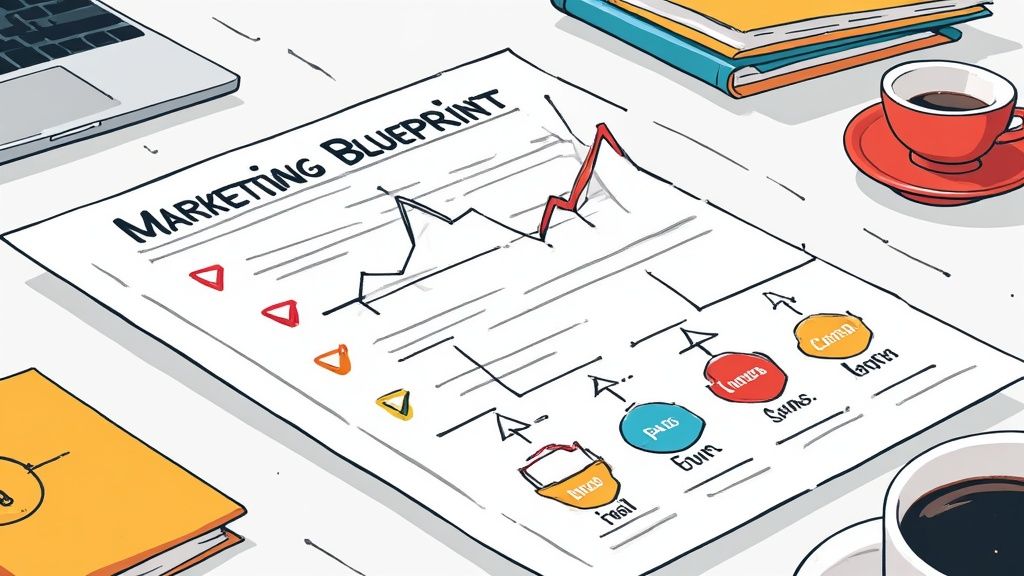
Feeling trapped by those massive, hundred-page marketing plans that just gather dust? You can actually build a lean, powerful marketing plan in about an hour. The idea is to focus on action over endless theory, skipping the corporate jargon to zero in on what really drives growth right out of the gate.
Craft Your One-Hour Marketing Plan
Forget the dusty binder on the shelf. The goal here isn’t to predict the next five years. It's to build a practical, one-page guide that you can start putting into action this week.
This is perfect for solo founders, freelancers, and small teams who need clear direction and quick results without getting bogged down. The whole thing boils down to answering three simple questions.
This isn’t about boiling the ocean; it’s about finding your first big wave to ride. By focusing your energy, you create a clear path to your first wins. That momentum builds confidence and gives you the data you need for your next move.
Define One Primary Business Objective
First things first: what is the single most important thing you need to achieve right now? Fight the urge to list ten different goals. For a plan this lean, clarity is everything. Your objective needs to be specific, measurable, and realistic for a short sprint.
Instead of a fuzzy goal like "get more customers," get specific:
- Generate 10 qualified sales leads in the next 30 days.
- Secure 50 sign-ups for our upcoming webinar.
- Hit $1,000 in sales from a new product launch this month.
A single, clear objective is your North Star. Every single decision you make from here on out should directly support that one goal. This focus stops you from wasting time and money on activities that don't move the needle on your most critical need.
Create a Laser-Focused Customer Persona
Next, you have to know exactly who you're talking to. Don't try to appeal to everyone. For this plan, you need to picture your absolute ideal customer—the one person who will get the most value from what you offer and will be the easiest to win over.
Ask yourself a few quick questions to sketch them out:
- Who are they? Give them a name and a job title. Something like, "Sarah, the freelance graphic designer."
- What's their biggest pain point? What problem keeps them up at night that you can solve? For Sarah, maybe "She wastes hours on admin tasks instead of creative work."
- Where do they hang out online? Pinpoint the specific platforms where they look for advice or connect with peers. Think LinkedIn groups for creatives or specific design blogs.
This isn't about some deep demographic dive. It's about building real empathy and getting inside the head of your target audience. That understanding is what makes your messaging and channel selection actually work.
Key Takeaway: A lean marketing plan trades breadth for depth. By focusing intensely on one objective and one customer persona, you create a powerful lever for growth that a single person can realistically manage.
Choose One or Two Marketing Channels
Finally, where are you going to reach Sarah? With your persona in hand, this decision gets a lot easier. Instead of trying to be everywhere at once, pick the one or two channels where your ideal customer is most active and open to hearing from you.
If you’re targeting B2B professionals, LinkedIn is probably your best bet. Selling a visual product to a younger crowd? Instagram or TikTok might be the move.
Of course, the heart of any good plan is what you're actually going to say on those channels. A modern content marketing strategy guide is the perfect roadmap for creating valuable content, no matter which platform you choose.
For your one-hour plan, the key is to pick a channel you can realistically own. This focus lets you learn the platform's quirks and create content that truly connects, instead of spreading yourself thin with mediocre posts across a dozen different places.
Build Your Foundational Marketing Stack
A great plan needs the right tools, but you don't need a dozen expensive subscriptions to get the ball rolling. Seriously. You can pull together a lean, cheap marketing stack that works from day one. The goal here is a seamless workflow to manage tasks and track what's working, all without the bloat (and cost) of an enterprise-level setup.
We're going to focus on three core tools that will become your marketing foundation: a project hub, a website builder, and a lead generation platform. By setting these up correctly, you create a powerful little system that connects your strategy directly to your daily execution.
This quick-start concept map shows the lean approach in action. It all centers on the three pillars of a one-hour marketing plan: locking down your customer, defining your value, and picking your channel.
As you can see, these three elements create a continuous loop. It's an agile system designed for rapid execution and learning on the fly.
Your Central Hub for Marketing Operations
Think of this as your mission control. It’s where your plan lives, where you track tasks, and where you manage your content pipeline. For this, Notion is a fantastic choice because it’s flexible enough to grow with you.
You can start by creating a dead-simple content calendar. Just create a new database in Notion with properties for:
- Content Title: The headline or topic you're working on.
- Status: A dropdown menu with options like "Idea," "Drafting," "Editing," and "Published."
- Publish Date: A calendar view to schedule your posts.
- Channel: The platform you're creating for (e.g., Blog, LinkedIn, YouTube).
This simple setup gives you a clean, visual overview of your entire content operation. It helps you hit deadlines and lets you see exactly how your day-to-day work lines up with the strategic goals in your marketing plan.
Your High-Converting Website or Landing Page
Your website is your digital storefront. It needs to be fast, look professional, and be optimized to turn visitors into leads. Webflow is a powerful tool that gives you total design control without forcing you to write code.
Start with a simple, one-page site focused on a single call-to-action (CTA). Your main job is to capture leads, so that lead capture form needs to be front and center. In Webflow's designer, just drag a "Form Block" onto your page and customize the fields. At a bare minimum, ask for a name and email address.
Make sure your form is connected to an email service or a simple database. This ensures every new lead is captured automatically, letting you follow up right away. For more advanced strategies on getting your site seen, you can dive into our guide on how to do SEO optimization yourself.
Your Engine for Lead Generation
Once your site is ready to capture leads, you need a way to find and reach your ideal customers. This is where a sales intelligence tool like Apollo comes in. It helps you build highly targeted lists of prospects based on the customer persona you've already defined.
Inside Apollo, use the filters to narrow your search. You can filter by job title, company size, industry, and even the specific technologies a company uses. For example, if your ideal customer is a "Marketing Manager" at a SaaS company with 11-50 employees, you can build that exact list in minutes.
Pro Tip: Don't just build a list; build a sequence. Apollo lets you create automated email and LinkedIn outreach sequences. This puts your prospecting on autopilot, freeing you up to focus on strategy and creating killer content.
Data is the fuel for all modern marketing, but many teams struggle to use it well. From 2020 to 2024, marketing teams increased their data usage by a staggering 230%. Yet, a whopping 87% of marketers feel that data is the most underutilized asset in their organizations. This highlights a huge gap between having data and actually using it for real insights. Your foundational stack helps close this gap by connecting your actions directly to measurable outcomes.
Your First Week Execution Checklist
A plan is just a document until you actually do something with it. So, let’s turn that one-hour plan into tangible results in just seven days. Forget the long-term roadmap for a minute. Right now, we’re focused on a 7-day sprint to build momentum and prove this strategy works.
The whole point is to get some early wins on the board. The structure is super practical—you can even import this daily breakdown into a project manager like Todoist to keep yourself focused on what matters most.
To make this as actionable as possible, here's a day-by-day sprint schedule. Think of this as your playbook for getting from zero to launched in one week.
Your First 7-Day Marketing Sprint
| Day | Focus Area | Key Tasks | Tool Spotlight |
|---|---|---|---|
| 1 | Tool Setup & Config | Connect Webflow forms to your email list/DB. Set up your content calendar in Notion. Build an initial prospect list in Apollo. | Notion, Webflow |
| 2-3 | Core Asset Creation | Write your pillar content (blog post/video script). Create 3-5 social posts to support it. Draft your email nurture sequence and landing page copy. | QuillBot, Webflow |
| 4-5 | Launch & Outreach | Publish the pillar content. Schedule social posts. Launch your first email or LinkedIn sequence to a small, targeted list of 20-30 prospects. | Apollo |
| 6-7 | Monitor & Pivot | Check website analytics, email open/click rates, and social engagement. Look for early signals of what’s working. Make small tweaks for next week. | Google Analytics |
This isn’t about perfection; it’s about motion. Follow this sprint, and by the end of the week, you'll have a live campaign generating real data. Now let's break down what each phase looks like.
Days 1-3: Setup and Creation
The first few days are all about getting your ducks in a row and creating your core assets. Think of Day 1 as laying the groundwork—getting your marketing stack configured so technical issues don't slow you down later.
Your main job is to connect the dots between the tools we've discussed. Make sure your lead form on Webflow actually sends contacts to your email provider. Build your content calendar in Notion and pull your first prospect list in Apollo using your customer persona.
With the foundation in place, Days 2 and 3 are for creation. This is where your marketing plan starts to feel real.
Focus on quality over quantity. Your goal is one great piece of content and the materials to support it.
- Pillar Content: Write that one blog post, script that one video, or design that one lead magnet that will be the centerpiece.
- Social Assets: Create 3-5 social media posts that tease, summarize, or link back to your main content.
- Email & Landing Page Copy: Draft the emails for your outreach sequence and write the copy for the Webflow page where your content will live.
A tool like QuillBot can be a lifesaver here, helping you rephrase and repurpose your core message for different channels without starting from scratch.
Days 4-5: Launch and Outreach
It's go-time. These two days are all about pushing your campaign live and starting conversations. The key here is momentum—you want to generate those first signals of engagement as quickly as you can.
Get your pillar content published on your site and schedule out your social media posts. Then, kick off that email or LinkedIn sequence you built in Apollo.
A Quick Note on Outreach: This isn't about blasting a huge list. Send your sequence to a small, hand-picked list of 20-30 prospects who are a perfect fit for your customer persona. A focused, personal approach beats a spray-and-pray tactic every time.
Days 6-7: Monitoring and Early Pivots
The last couple of days are for listening. With your campaign out in the wild, you need to watch the early data to see what’s hitting and what’s missing. This is your first feedback loop.
Jump into your website analytics. How many people are visiting the new landing page? Check your email platform—what are the open and click-through rates looking like? See what's happening on social media. Any likes, comments, or shares?
You're not looking for massive numbers. You're looking for signals. Did one social post get way more engagement than the others? Is a particular email subject line crushing it? These little data points are gold. Based on what you see, you can make your first informed pivot and adjust your messaging for the next week, turning your static plan into a living strategy.
Put the Plan Into Action with Channel-Specific Workflows
A plan sitting in a Notion doc is just a theory. Execution is what gets you paid. This is where we get our hands dirty with four simple, plug-and-play micro-workflows for the channels that matter most.
Think of these as mini-playbooks you can run this week. They're not massive, complicated campaigns. They are quick, focused sprints designed to build momentum and bring in real-world data, which is exactly what a lean marketing plan is all about.
The Content Creation and Repurposing Engine
Your goal here is to create one high-value "pillar" blog post and then slice it up into at least five smaller social media assets. This is how you maximize every ounce of effort—one big push can fuel your channels for an entire week, if not longer.
First, write that in-depth blog post. Make sure it goes deep on a real pain point your ideal customer is struggling with. Once it’s live, the real fun begins.
- Spin Off Key Sections for Social: Pull out three of the most compelling stats or takeaways from your article. Use a tool like QuillBot to rephrase them into unique, snappy captions for LinkedIn or X (formerly Twitter).
- Generate Short-Form Video Clips: If your pillar content has a video component (like an interview or tutorial), upload it to Opus Clips. The AI is brilliant at finding the best soundbites and automatically generating a handful of ready-to-post video shorts, complete with captions.
- Design a Carousel Post: Take any list or step-by-step process from your article and turn it into a simple, multi-slide carousel for Instagram or LinkedIn. Each slide gets one point, making the info super digestible for scrollers.
This simple process turns one major content effort into a full week's worth of posts, creating multiple paths for people to find their way back to your main article.
The Automated Email Welcome Series
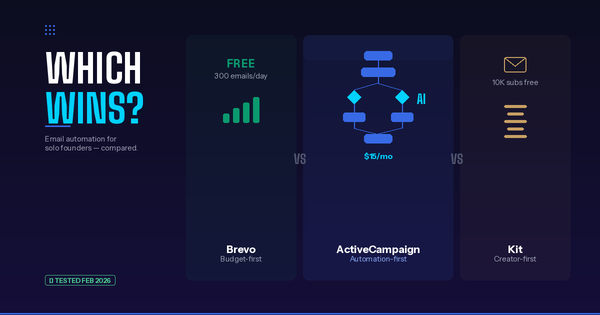
The first few interactions with a new lead are everything. A simple 3-part automated welcome series can build that initial relationship for you, without you lifting a finger. With a platform like Brevo, you can knock this out in less than an hour.
- Email 1 (Sent Immediately): Welcome and Deliver. Thank them for signing up and give them what they came for—the lead magnet, the guide, whatever it was. Keep it short, sweet, and focused on instant value.
- Email 2 (Sent 2 Days Later): Educate and Empathize. Send a quick tip or share a common mistake people make related to the problem you solve. This shows you get it and builds your authority.
- Email 3 (Sent 4 Days Later): Introduce the Solution. Now you can gently introduce your product or service as the answer to the problem you just discussed. Include a soft CTA, like an invitation to a demo or a link to a case study.
Getting this sequence in place is a foundational piece of lead nurturing. If you want to dive deeper into connecting all your channels, you can explore different approaches to marketing automation for small business.
Pro Tip: Your welcome series should be about teaching, not selling. You're building trust here. Aim for a 90/10 split—90% helpful content, 10% promotional.
LinkedIn Outreach That Doesn't Feel Robotic
We've all received those terrible, generic connection requests on LinkedIn. They get ignored instantly. This workflow uses Apollo to find the exact right people and then engage with them like an actual human.
Start by building a hyper-focused list in Apollo based on your ideal customer persona. From there, it's just a simple two-step sequence.
- The Connection Request: Keep the note short and personal. Mention a post they recently shared, a shared connection, or something cool their company is doing. The only goal is to get them to accept—no pitching! Example: "Hi [Name], saw your recent post on [Topic] and really enjoyed your take. Would love to connect."
- The Follow-Up Message (3 Days Later): Once they accept, send a follow-up that gives instead of asks. Share a link to a resource (like your pillar blog post) that’s genuinely relevant to their role. This frames you as a helpful expert, not just another salesperson.
This slow-burn approach builds real rapport and opens the door for a real conversation later on.
The Small-Budget Paid Ad Test
You don't need a massive ad budget to figure out if paid channels can work for you. All you need is a small, focused test to get some initial data on your audience and messaging. We'll use Snapchat For Business for a quick validation test with just $50-$100.
Set up a simple campaign driving traffic to your pillar content. Target a very narrow audience—focus on a single demographic or interest that aligns with your persona. The goal isn't to get a flood of leads; it's to measure your click-through rates (CTR) and cost per click (CPC).
Paid search is still a giant in the ad world, making up 39.5% of the total market share. With projected spending in the U.S. alone set to hit $124.59 billion in 2024, learning how to run lean, effective tests is a non-negotiable skill. Even a tiny budget can give you the data you need to inform your broader marketing plan. You can find more on the latest numbers by checking out these key marketing statistics and trends.
Measure What Matters with Simple KPIs
How do you know if your plan is actually working?
Simple. You track it. Execution without measurement is just guessing, and we're not here to guess. This is where we cut through the noise of vanity metrics and focus on the simple, effective tracking that tells you what’s really moving the needle.
The goal isn't to build some complex, enterprise-level dashboard. It’s about creating a tight feedback loop with just a handful of Key Performance Indicators (KPIs). This is what fuels continuous improvement based on real performance—so you know when to double down on a winning channel or quickly pivot your messaging.
Choosing Your Core Marketing KPIs
For a lean marketing plan, you really only need a few core metrics to get started. Drowning in data is just as bad as having none at all. Let's get laser-focused on three KPIs that give you a clean, clear picture of your marketing health from acquisition to engagement.
Think of these three as a balanced view: one for cost, one for effectiveness, and one for audience connection.
- Cost Per Lead (CPL): This is the ultimate bottom-line metric. It tells you exactly how much you're spending to get one new lead. Just divide your total marketing spend on a campaign by the number of leads it generated. Simple as that.
- Conversion Rate: This measures how well you turn visitors or prospects into actual leads or customers. It’s the percentage of people who take the action you want them to, like filling out a form on your landing page or signing up for your newsletter.
- Engagement Rate: This shows how much your audience is actually interacting with your content—think likes, comments, shares, or saves on a social media post. High engagement is a massive signal that your message is resonating.
To really get this right, you have to measure social media engagement effectively and move past just counting followers.
Simple Tracking Templates for Notion and Sheets
You don't need fancy, expensive software for this. A simple spreadsheet or a Notion database is all you need to get started. To make it even easier, I’ve created downloadable templates for both Google Sheets and Notion that you can copy and use from day one.
These templates are already built to track the KPIs we just covered. All you have to do is plug in your numbers each week. This simple habit will give you a clear, historical view of your performance, making it dead simple to spot trends and make smart, fast decisions.
The AI marketing industry has seen explosive growth, and leveraging data is what's driving it. The global AI in marketing market was valued at $47.32 billion in 2025, a huge jump from just $12.05 billion in 2020. This shift shows how critical data-driven strategies are, and even a simple tracking sheet is your first step into that world.
Privacy-Friendly Analytics with Fathom
While Google Analytics is a powerful tool, a lot of founders are looking for simpler, privacy-focused alternatives. Fathom is an excellent choice for this. It gives you the website data you need without collecting personal data from your visitors, helping you stay compliant with privacy laws like GDPR right out of the box.
Fathom's dashboard is clean and easy to understand, focusing on core metrics like unique visitors, page views, and bounce rate. It provides the essential information needed for a lean marketing plan without the overwhelming complexity of bigger platforms. For a deeper dive, you can still explore our guide on setting up Google Analytics for small business.
Key Insight: Your first marketing plan won't be perfect. The goal isn't flawless execution; it's rapid learning. By tracking a few simple KPIs, you turn every action—successful or not—into valuable data that makes your next move smarter.
Ultimately, measurement is about creating that feedback loop. You execute, you measure the result, you learn from it, and then you adjust the plan. This agile cycle is what separates a static document from a living marketing strategy that actually drives growth.
Got Questions? Let's Talk Through Them.
Even the sharpest marketing plan hits a few bumps in the real world. Questions always pop up once you start executing. A lean marketing plan isn't something you carve in stone and admire; it's a living, breathing guide that you'll constantly tweak and adjust.
So, let's get into the most common questions that come up when you’re in the trenches, turning that plan into reality. Think of this as your quick-reference guide for when things get messy and you need to make a smart call.
How Often Should I Actually Look at This Plan?
For the kind of one-page, lean plan we're building here, you need a rhythm. Think weekly check-ins and bigger monthly or quarterly reviews. That old-school annual marketing review? Forget it. The market moves way too fast for that.
Your weekly check-in should be fast. A quick 15-minute glance at your KPIs from the past week. Are your outreach emails getting replies? Did that new blog post get any shares? This is your time for micro-pivots—tweaking a subject line, swapping out the CTA on a LinkedIn post, that sort of thing.
Then, once a month or every quarter, you zoom out. This is your strategic huddle. You’re stepping back to ask the bigger questions:
- Is our main objective still the right one for the business right now?
- Have we learned anything new about our ideal customer?
- Based on the data, should we start testing a new channel?
This cadence of small, frequent tweaks and larger, less frequent pivots is what keeps your marketing sharp and effective.
What if I Have Almost No Budget?
A tiny budget isn’t a dead end. Honestly, it’s a blessing in disguise because it forces you to be creative and disciplined. When you can't outspend the competition, you have to outsmart them. The secret is a ruthless focus on high-leverage activities that don't cost a dime.
First, channel selection is everything. Forget about fancy paid ad campaigns for now. All your energy should pour into organic channels where you trade your time and effort for results. We're talking SEO-driven content, manual outreach on LinkedIn, and maybe building a small community in a niche forum or Slack group.
Second, master the free tools. Your core stack of Notion, Webflow, and the free version of Apollo can get you surprisingly far. Get really good at using a few essential tools instead of paying for a dozen you barely touch.
A small budget forces you to validate every single idea with sweat equity before you invest a dollar. This is how you build a resilient, powerful marketing engine that can actually stand the test of time.
Help! My Strategy Isn't Working. What Now?
First off, don't panic. A "failed" campaign is just a learning opportunity in disguise. The most critical step is to figure out why it’s not working, and this is exactly why we set up that simple KPI tracker. It’s about to become your best friend.
Start by diagnosing the problem. Where's the leak? Is it at the top of your funnel (getting seen) or closer to the bottom (getting signups)?
- Is it an awareness problem? If you're seeing nothing but crickets—low traffic, few impressions, zero engagement—then people simply aren't seeing your stuff. The message might be perfect, but it's not reaching anyone. Time to rethink your channel choice or how you're distributing your content.
- Or is it a conversion problem? If you're getting decent traffic but nobody's taking that next step, your offer or messaging is likely off. The right people are showing up, but what they find isn't compelling them to act. You need to A/B test your landing page copy, your CTA, or the value of your offer itself.
Once you’ve pinpointed the bottleneck, run a small, fast experiment to try and fix it. Change just one variable—the headline, the audience segment, the offer—and see what happens. This loop of diagnosing, testing, and learning is the heart of lean marketing. It's the fastest way to turn a failing strategy into a winning one.