
AiSDR Review 2026: The $250 Tier That Changed the Maths
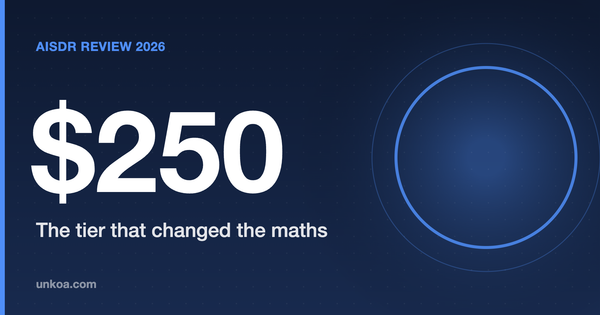
AiSDR used to cost $900 a month on a quarterly contract. A new $250 Solo tier cut the cost of finding out by 72%. Here is what each tier actually buys, and why it is not volume.
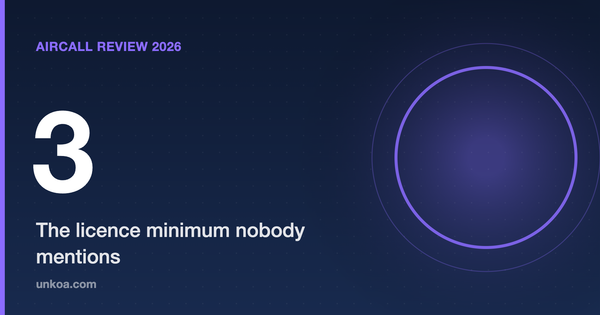
Aircall advertises $30 per licence, but you cannot buy fewer than three. That makes the real entry price $90 a month. Here is what you actually pay by team size, and where the add-ons take the bill.
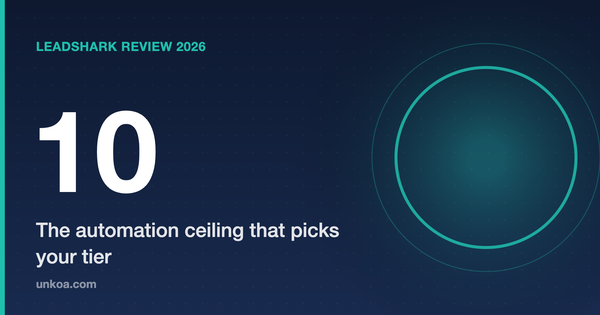
LeadShark turns LinkedIn post comments into DMs and email addresses, from $39 a month. Two numbers decide your tier: the ten-automation ceiling on the entry plan, and the $30 gap to the nearest general-purpose alternative.
LearnWorlds charges $5 per paid enrollment on Starter. Teachable charges 7.5%. Below a $67 course price LearnWorlds wins on fees, above it Teachable does. Here is the full breakdown, with the exact enrollment count where upgrading pays for itself.
Navan Business is free up to 300 employees, with unlimited trips and no per-trip fee. The only number that matters is your sixth expense user.
Credits are charged per second, the 720p ceiling is real, and the one-time credit packs are a worse deal than the subscription. Here is the arithmetic.
All three cost about the same per article, which proves price is the wrong axis. Pick on which part of your content pipeline is actually missing instead.
The bounce-rate rule everyone quotes is not published by any mailbox provider. Here is what Gmail actually enforces in 2026, and what list cleaning costs.
Apollo charges per seat, Snov.io charges per workspace. We run the 2026 pricing, the credit maths, and the three scenarios that decide which is cheaper.
Substack takes 10% of your subscription revenue forever. beehiiv charges a flat $43 and takes nothing. Here is the exact point where that flips, worked out.
In November 2025 the OECD put a number on when a remote employee's home office becomes their employer's foreign tax problem. What the 50% rule says, why it is not a safe harbour, and how small companies structure around it.
AI made finding and screening people anywhere on earth nearly free. Employing them legally is the part it cannot do. How small teams split the hiring workflow in 2026, with the data behind it.