Improving Customer Lifetime Value for Growth

Improving your customer lifetime value (CLV) is a game-changer. It’s all about shifting your focus from quick, one-time sales to building profitable, long-term relationships with the people who already buy from you.
Think of it this way: CLV is the most reliable path to sustainable growth because it prioritizes getting more value from the customers you already have. This isn't just a nice idea; it's a far more cost-effective strategy than constantly chasing new leads. You're turning your existing customer base into your most powerful financial asset.
Why CLV Is Your Most Important Growth Metric
While flashy customer acquisition campaigns tend to steal the spotlight, the real engine of a sustainable business is improving customer lifetime value. Let's be honest, chasing new leads is expensive. Nurturing the relationships you've already built? That's where the profit is.
Imagine two online businesses for a moment. Business A spends aggressively on ads, bringing in 100 new customers who each make a single $50 purchase. Meanwhile, Business B focuses on its existing base, encouraging 50 of its loyal customers to make three additional $50 purchases throughout the year.
Business A brings in $5,000 in revenue, but its acquisition costs are through the roof. Business B, on the other hand, generates an extra $7,500 from customers it already paid to acquire. This dramatically boosts profitability without a massive new marketing spend. This isn't just a hypothetical scenario; it's the financial reality for companies that truly master retention.
The Financial Impact of Retention
The economic case for focusing on CLV is just undeniable. Acquiring a new customer can cost up to five times more than keeping an existing one. That's a huge difference.
Even better, a relatively small improvement in retention can lead to a massive increase in overall revenue. Research from Bain & Company shows that a mere 10% increase in CLV can elevate a company's revenue by as much as 30%. It’s a powerful multiplier.
Shifting your mindset from one-off transactions to long-term relationships isn't just a feel-good strategy; it's a critical financial imperative. A higher CLV means you can spend more to acquire better customers, creating a flywheel of profitable growth that builds a more resilient business.
From Metric to Mindset
Ultimately, improving customer lifetime value requires more than just a new calculation on a spreadsheet; it demands a cultural shift within your business. Every single decision, from product development and feature updates to how you handle customer support tickets, should be viewed through the lens of its impact on the long-term customer relationship.
It boils down to a few core principles:
- Deliver exceptional experiences: Every interaction, big or small, is an opportunity to strengthen loyalty.
- Personalize your communications: Show customers you actually understand their needs and what they care about.
- Reward loyalty: Create programs that give people a real reason to stick around and make them feel genuinely valued.
This approach transforms your focus from simply making a sale to creating a lifelong fan. If you want to dive deeper into why this metric is so crucial and explore different ways to tackle it, check out this guide on key strategies to increase customer lifetime value.
How to Actually Measure Customer Lifetime Value
You can't improve what you don't measure. It's an old cliché, but when it comes to customer lifetime value (CLV), it's the absolute truth. Getting a real, tangible number—even if it's not perfect at first—is the only way to move beyond theory and start making smarter decisions.
Forget about needing a data analyst. As a solo operator, your goal is to set up a simple, repeatable process to calculate and watch your CLV. Think of it as a health monitor for your business.
The Building Blocks of CLV Calculation
To get a practical CLV number, you only need three pieces of data. These are the core inputs that tell you how customers are behaving and form the foundation of your calculation.
- Average Purchase Value (APV): This is just the average amount a customer spends in a single order. To find it, divide your total revenue for a period (say, last quarter) by the number of orders in that same timeframe.
- Purchase Frequency (PF): This tells you how often the average customer buys from you. Calculate it by dividing the total number of orders by your number of unique customers during that same period.
- Average Customer Lifespan (ACL): This is your best guess for how long a customer will stick around. This one's tricky if you're new. Don't overthink it—start with an educated estimate, like 1 to 3 years, and you can always refine it later as you gather more history.
Once you have these three numbers, the formula is refreshingly simple: CLV = APV x PF x ACL. This gives you a baseline, a starting point you can work to improve.
Using a CRM to Automate Tracking
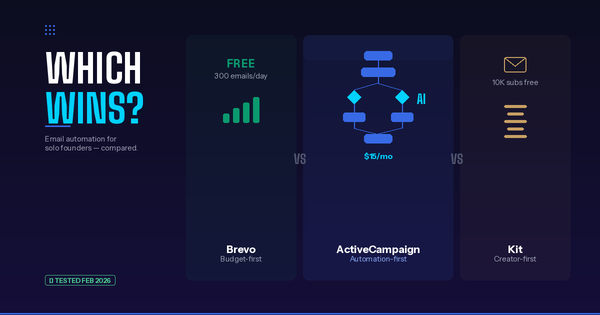
Listen, nobody wants to be stuck pulling these numbers from spreadsheets every month. It’s tedious and a recipe for mistakes. This is where a simple Customer Relationship Management (CRM) tool is a lifesaver. A platform like Brevo can do most of this heavy lifting for you.
When you connect your sales platform, a CRM automatically logs every purchase, ties it to a customer, and calculates metrics like APV and PF on the fly. This frees you from the drudgery of data entry and gives you a clean, up-to-date look at your business health. You can even supplement this by learning how to set up Google Analytics for your small business to get an even richer picture of customer behavior.
The real magic of a CRM is that it turns raw sales numbers into human stories. You start to see who is buying, not just what was bought, and how their behavior changes over time. That’s the first real step toward improving your CLV.
Unlocking Insights with Cohort Analysis
Once you have your baseline CLV, the real fun begins. You need to figure out why that number is what it is. The best way to do that is with cohort analysis. It sounds technical, but it’s just a fancy way of grouping customers by a shared trait—usually the month they first signed up.
For example, you'd create a "January 2024" cohort, a "February 2024" cohort, and so on. By tracking the spending of each group over the following months, you can spot powerful trends. Are customers from February spending more than the ones from January? Did a new feature you launched in March make that month's cohort stick around longer?
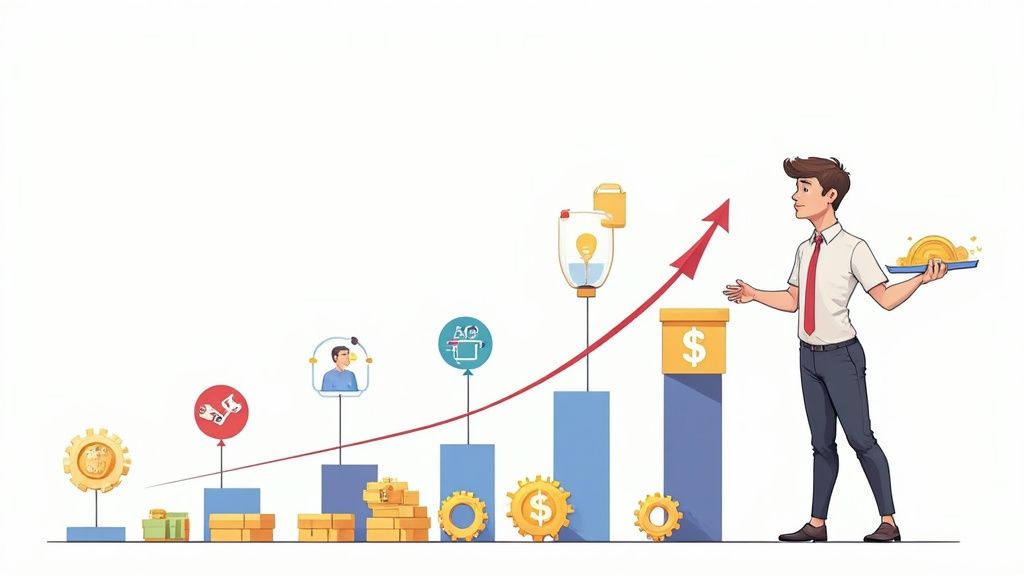
This simple concept is why focusing on retention is so critical for growth.
As the graphic shows, keeping customers happy and engaged isn't just a feel-good metric; it directly drives profitability. Every bit of effort you put into the post-purchase experience pays dividends. Cohort analysis is what lets you measure the true impact of those efforts.
Find Your Best Customers with Smart Segmentation
If you're treating every customer the same, you're probably leaving money on the table. It's one of the fastest ways to burn through your marketing budget. The real key to boosting customer lifetime value is figuring out who your best customers are—and then finding more people just like them.
This means going deeper than basic demographics. We need to get into behavioral segmentation.
This isn't about shutting people out. It’s about putting your energy and resources where they’ll actually make a difference. When you get a handle on the different "types" of customers you serve, you can start tweaking your messaging, offers, and the entire experience to match what actually drives them. That's how you turn a one-time buyer into a raving fan.
Identifying Your Core Customer Personas
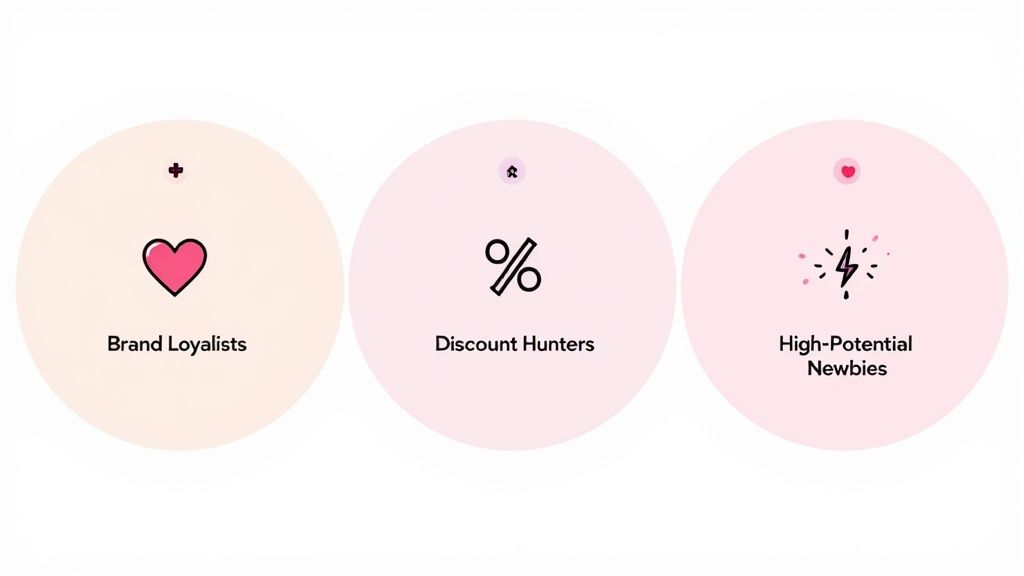
First things first, you have to group your customers by what they do, not just their age or location. While you can slice this data a million ways, most businesses find their customers naturally fall into a few key personas.
Here are three common (and incredibly useful) segments to start with:
- Brand Loyalists: These are your VIPs, plain and simple. They buy from you often, spend more than the average joe, and don't bother waiting for a sale. They're your most valuable asset because their CLV is already sky-high, and they’re the ones telling their friends about you.
- Discount Hunters: This group lives and dies by the deal. Sales, promotions, and coupon codes are what get them to click "buy." Their average order value might be lower, but don't write them off—they can drive a huge amount of revenue during big promotional pushes.
- High-Potential Newbies: Think of these as your rising stars. They're first-time buyers who came in strong with a significant initial purchase. They’ve shown they like what you’re selling, but their loyalty is still up for grabs. Nurturing this group is absolutely critical if you want to turn them into future Brand Loyalists.
Once you’ve got these groups defined, you can finally stop blasting everyone with the same generic marketing message. It’s time to start crafting campaigns that speak directly to what each persona actually cares about.
Mapping the Journey for Each Segment
Each of these customer types takes a completely different path. Your Brand Loyalist doesn't need to be sold on your value, but they’d love to get early access to new products. On the other hand, a Discount Hunter might completely ignore you until you drop a 20% off coupon.
Mapping out these distinct journeys helps you find the perfect moments to connect.
The goal is to deliver the right message at the right time. A personalized welcome email sequence is a game-changer for a High-Potential Newbie. For a Brand Loyalist, an exclusive invite to a VIP community might be the perfect touch to make them feel truly valued.
This strategic approach makes your marketing feel helpful, not annoying. You're respecting their relationship with your brand and giving them exactly what they need to take the next step, building loyalty and driving those all-important repeat purchases.
Real-World Example: Segmentation in Action
Let’s make this real. Imagine a small e-commerce shop selling artisanal coffee. They noticed their repeat purchase rate was totally flat. Why? They were sending the same weekly newsletter—product announcements and brewing tips—to their entire list.
So, they dug into their sales data and identified the three segments we just talked about. Using an email tool like Brevo, they set up distinct campaigns for each group:
- Brand Loyalists got early access to rare, limited-batch coffees and exclusive stories from the growers.
- Discount Hunters were sent targeted promotions on their favorite blends and heads-up notifications about upcoming sales.
- High-Potential Newbies were dropped into a welcome sequence that told the brand's story, shared brewing guides, and offered a small discount on their second order to get them back.
The results were stunning. By sending hyper-relevant campaigns, the brand doubled its repeat purchase rate in just six months. That simple act of segmentation turned their email list from a megaphone into a powerful engine for growing customer lifetime value.
Putting It All to Work: Proven Tactics to Increase Retention and Spending
Once you’ve sliced and diced your customer segments, it's time to shift from analysis to action. This is the fun part—where you start actively improving your CLV by creating experiences that build loyalty and encourage customers to spend more. The goal here isn't to be pushy; it's to make every interaction so valuable that customers want to stick around and buy again.
It's less about aggressive sales tactics and more about being genuinely helpful, personal, and timely. When you deliver the right experience at the right moment, you build trust. And trust is the bedrock of a high CLV.
Design a Flawless Onboarding Experience
The first few days after a customer signs up or makes their first purchase are make-or-break. Seriously. This is your one shot to make a killer first impression and set the stage for a long-term relationship. A confusing or silent onboarding process is one of the fastest ways to lose a high-potential customer before they even get started.
Your main job is to make new customers feel seen, valued, and successful right out of the gate.
- Welcome them instantly. The second they convert, an automated welcome email or message should hit their inbox. It confirms their action and immediately opens a line of communication.
- Show them the very next step. Don't make them guess. Guide them toward the one key action they need to take, whether that’s setting up their profile, trying a core feature, or checking out a specific product category.
- Be there for questions. An automated chatbot, maybe from a tool like ManyChat, can be a lifesaver for answering common questions 24/7. It removes friction and shows you're ready to help.
A solid onboarding flow slashes early-stage churn and dramatically boosts the odds of a second purchase. For a deeper look at strategies to reduce churn, check out this excellent guide on how to improve customer retention.
Master Smart Upselling and Cross-Selling
Once a customer is happily on board, you can start thoughtfully presenting ways for them to get even more value from your business. Upselling (offering a better version of what they have) and cross-selling (offering a related product) are two of the most effective ways to pump up your Average Purchase Value.
But the secret is to make these offers feel helpful, not like a cash grab.
Your recommendations should feel like a natural next step in their journey, not a random sales pitch. Use their purchase history and browsing behavior to suggest products that genuinely solve a related problem or enhance their initial purchase.
For instance, if someone just bought a high-end camera, cross-selling a compatible lens or a protective camera bag makes perfect sense. Trying to sell them a printer? Not so much. Timing is everything, too. The best moment for an offer is often right after a purchase or in a follow-up email a few days later when they're most engaged.
Tackle Churn Head-On with Re-Engagement Campaigns
No matter how awesome your product is, some customers will inevitably drift away. Getting proactive about identifying and re-engaging these "at-risk" customers is one of the most direct ways to protect and improve CLV. Don’t just wait for them to disappear for good.
First, you have to define what "at-risk" actually means for you. Is it a customer who hasn't logged in for 30 days? Someone who hasn't bought anything in 90 days? Once you’ve identified this segment, you can launch a targeted re-engagement campaign.
- Send a "We Miss You" email. A simple, personalized note can work wonders. You might even include a small, exclusive discount to entice them back.
- Ask for feedback. Sometimes, people leave for a specific reason. A quick survey asking why they've been away can either win them back (if you solve their problem) or give you priceless insights to prevent future churn.
- Showcase what’s new. Remind them why they signed up in the first place by highlighting new features, products, or content they might have missed.
By focusing on proactive tactics like these, you stop playing defense and start actively building relationships that last longer and generate more revenue.
Run Smart Experiments to Optimize Pricing and Offers
Your pricing is one of the most powerful levers you can pull to increase CLV, directly impacting your Average Purchase Value and overall profitability. But you shouldn't just guess what might work. The key is to run small, controlled experiments to find that pricing sweet spot.
For more on the fundamentals, we have a complete guide on creating a pricing strategy for your small business.
To get you started, here’s a table with a few practical ideas for experiments you can run to directly influence your CLV.
CLV Improvement Experiment Ideas
| Experiment | Hypothesis | Success Metric | Tools Needed |
|---|---|---|---|
| Post-Purchase Upsell Offer | By presenting a one-time, discounted offer for a premium version immediately after checkout, we can increase average order value without hurting the initial conversion rate. | A 10% or greater increase in Average Purchase Value for the test group, with no significant drop in the initial purchase conversion rate. | Checkout software (e.g., Shopify, ThriveCart), A/B testing tool. |
| Tiered Pricing Test | Introducing a new, higher-priced tier with exclusive features will attract high-value customers and increase overall revenue per user. | At least 5% of new customers choose the premium tier; overall ARPU increases by 8%+. | Pricing page, analytics tool (e.g., Mixpanel, Google Analytics). |
| "We Miss You" Discount | Offering a personalized 15% discount to customers who haven't purchased in 90 days will reactivate at least 5% of the dormant segment. | A 5% reactivation rate from the targeted email campaign. | Email marketing platform (e.g., Mailchimp, Klaviyo), CRM. |
| Onboarding Checklist | Adding an interactive checklist to the user dashboard will increase feature adoption and reduce churn in the first 30 days. | 20% increase in key feature adoption; 10% reduction in first-month churn. | In-app messaging tool (e.g., Intercom), product analytics. |
Focused experiments like these take the guesswork out of the equation and give you clear data on what your customers actually respond to. By continuously testing and refining your onboarding, upselling, and re-engagement strategies, you build a powerful, repeatable system for consistently growing your customer lifetime value.
Build a Seamless Omnichannel Customer Experience
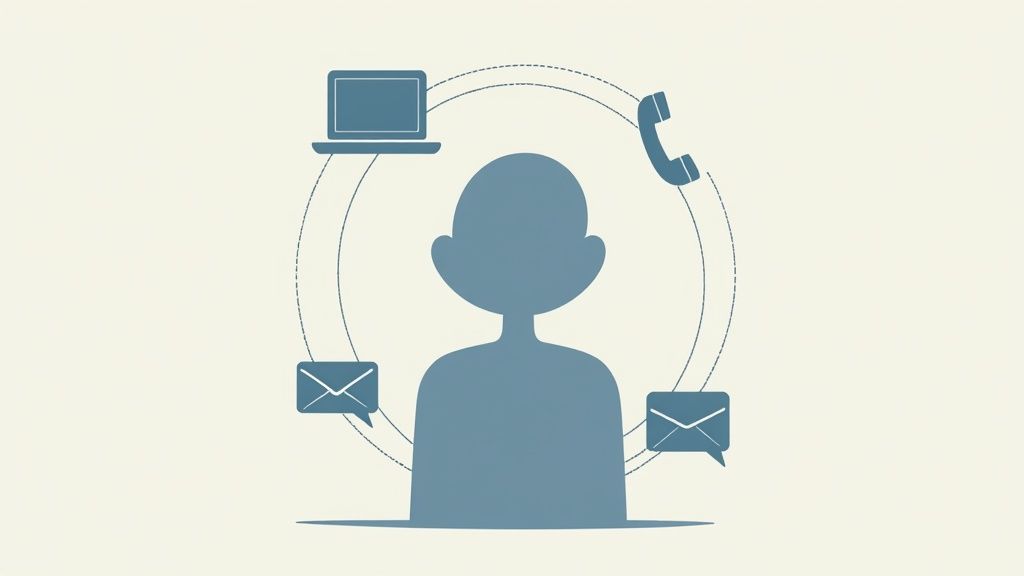
Your customers don’t think in channels. Seriously. They don’t care if they’re on your website, scrolling your social media, or firing off a support email—to them, it’s all one brand. A clunky, disconnected experience is one of the fastest ways to kill customer lifetime value because it just creates friction and frustration.
A truly seamless omnichannel experience means a customer's journey flows effortlessly from one touchpoint to the next. Think about it: the conversation they started with a chatbot on your Webflow site should be right there for the support agent they email an hour later. It’s all about creating one single, unified conversation with your brand.
Unifying Your Customer Touchpoints
First things first, you need to map out every single place a customer might interact with you. This goes way beyond your website or Shopify store. You need to think about everything.
- Social Media: How are you handling DMs and comments? A tool like SocialBee can help keep these conversations from falling through the cracks.
- Customer Support: Your phone calls, probably managed through a system like Aircall, and your email tickets absolutely need to share the same data source.
- Email Marketing: Do your promotional emails have any clue about a customer's recent purchases or that support ticket they just opened? They should.
- Website Chat: Live chat or automated bots, maybe from a tool like ManyChat, should be able to tap into customer history to give actually useful help.
When these systems are siloed, the customer is forced to repeat themselves over and over. That instantly degrades their experience. The goal is to connect all these data points so every interaction feels personal and informed. If you're looking for tools to help connect these dots, you can check out our guide on marketing automation software for small businesses.
Practical Omnichannel Scenarios in Action
Let’s get out of theory and into the real world. Imagine a customer browses a specific product category on your site but leaves without buying. An effective omnichannel strategy would see that behavior and connect it to other channels.
A few hours later, a personalized chatbot message could pop up on your site or even on social media, offering a small discount on that exact category. This only works if your website analytics and your chatbot are talking to each other, triggering actions based on what the user actually does.
Here’s another one for customer support. When a customer calls your support line, the agent using a tool like Aircall should immediately see the customer’s entire order history, recent support tickets, and even their loyalty status. This context lets the agent provide faster, more personalized resolutions without making the customer re-explain everything they’ve already told you somewhere else.
By ensuring every interaction, regardless of the platform, feels connected and personal, you turn casual buyers into loyal advocates. This consistency builds trust, which is fundamental to improving customer lifetime value.
The Financial Case for Omnichannel
Investing in a unified experience isn't just about making things feel nice; it has a massive financial impact. The data is pretty clear: companies with strong omnichannel strategies retain 89% of their customers. Compare that to just 33% for businesses with weak, siloed strategies.
That's a 56-percentage-point difference in retention. It gets better.
Omnichannel shoppers also have a 30% higher lifetime value and spend more than single-channel users. The full research reveals even more insights into these trends.
This stark contrast makes it obvious that a disconnected approach just doesn't cut it anymore. Customers expect—and reward—a cohesive brand experience. That makes an omnichannel strategy one of the most powerful levers you can pull for long-term, profitable growth.
Common Questions About CLV
When you start digging into Customer Lifetime Value, a bunch of questions usually pop up. Moving from theory to actually using it in your business can feel like a big leap. Let's clear up some of the most common sticking points so you can move forward with confidence.
What's the Simplest Way to Calculate Customer Lifetime Value?
For a quick, back-of-the-napkin calculation that still gives you a powerful starting point, stick to the classic formula: CLV = (Average Purchase Value) x (Average Purchase Frequency Rate) x (Average Customer Lifespan).
This breaks a big concept down into three easy-to-find numbers.
First, figure out what a customer spends on an average order. Then, see how many times they typically buy from you in a year. Finally, estimate how many years you can expect them to stick around. It's that straightforward.
Sure, there are more complex predictive models out there, but this formula is perfect when you're just starting. It gets you in the game without needing a data science degree.
How Long Does It Take to See Results from CLV Strategies?
This is a classic "it depends" scenario, but I can give you some real-world timelines. The time it takes to see a payoff really hinges on the specific tactic you're using. Some moves deliver a surprisingly fast bump, while others are a slower burn that pays off down the road.
If you're looking for a quick win, things like a targeted upselling campaign or a special offer sent to your best customers can move the needle on revenue within a single quarter.
On the other hand, bigger, foundational changes are a long-term play. If you're overhauling your onboarding process or building out a loyalty program from scratch, you'll see leading indicators like better engagement in about 3-6 months. But the full, statistically significant impact on CLV? That could take 12-18 months to really show up in the numbers.
Which Is More Important: Customer Acquisition Cost or CLV?
I get this question all the time, and it's a bit of a trick question. It’s like asking if an engine or wheels are more important for a car. You need both, and they have to work together. The key is looking at them through the lens of the CLV:CAC ratio.
A healthy business absolutely must make more money from a customer than it spent to get them. Simple as that.
The go-to benchmark for a sustainable business is a CLV:CAC ratio of 3:1 or higher. For every dollar you put into acquiring a customer, you should be getting at least three dollars back over their lifetime with you.
If you focus only on lowering your acquisition cost (CAC), you risk attracting low-quality customers who buy once and disappear. But if you only focus on CLV without watching your spending, you can grow yourself right out of business. The sweet spot is optimizing the ratio for profitable, sustainable growth.
Can I Improve CLV Without a Large Budget or Team?
One hundred percent, yes. You don't need a massive budget or a dedicated retention department to make a huge difference. Solo founders and small teams can get amazing results by focusing on smart, low-cost activities that build real customer relationships.
Start with the basics. Deliver incredible, personal customer service every single time. Use accessible tools like Brevo to send personalized thank-you emails or follow-ups with genuine advice. These small touches go a long way.
Another high-leverage move? Actively ask for customer feedback with simple surveys or one-on-one chats. More importantly, show them you're listening by acting on what you learn. These kinds of strategies build genuine loyalty—the bedrock of high CLV—and they cost more in effort than they do in cash.